Dental veneers: what they are, how they work and what they cost in Turkey.
Veneers are thin shells bonded to the front of your teeth to change their color and shape. This guide covers the types of veneers, the treatment, the pros and cons and real prices, so you can decide with confidence. Treatment then takes a single week in Istanbul.
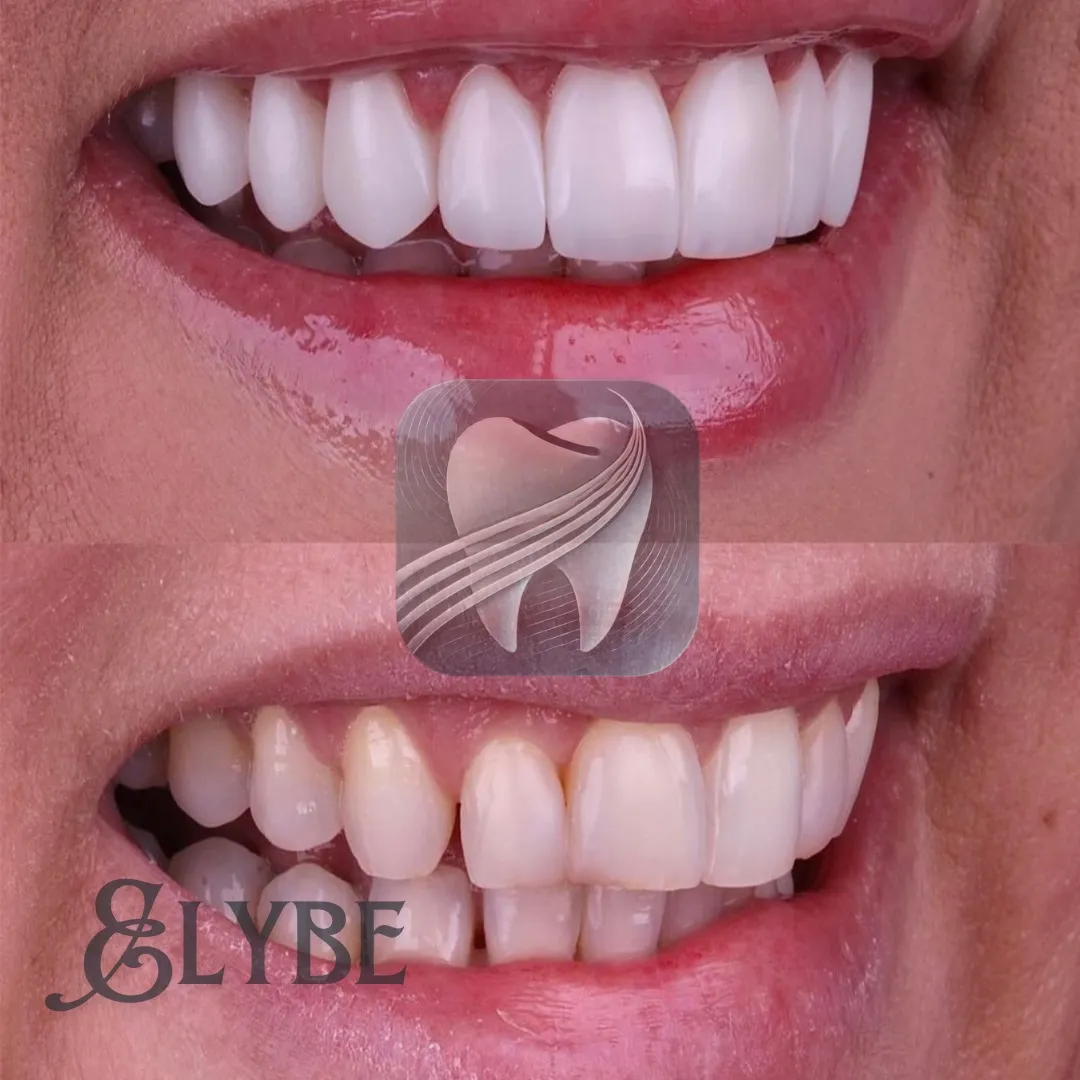
What are dental veneers?
Dental veneers are thin, tooth-colored shells made of porcelain or composite resin that are bonded to the front of the teeth to improve their color, shape, size or length. In dentistry, a veneer is a cosmetic treatment: it covers stains, chips, worn edges and small gaps. At Elybe Clinic in Istanbul, one veneer costs €180 to €350, compared with $925 to $2,500 per porcelain veneer in the US.
- Best for: stained, chipped, worn or slightly gapped front teeth.
- Treatment time: 5 to 7 days, under local anesthetic.
- Lifespan: 5 to 7 years for composite, 10 to 20 for porcelain.
- Permanent: usually yes, a thin layer of enamel is removed.
Porcelain, zirconia, composite or Lumineers?
Each material has its own detailed page. Here is how they compare.
Composite veneers
Tooth-colored resin shaped directly on the tooth. Cheapest and easy to repair, but stains and wears in 5 to 7 years.
€180 per tooth
Emax porcelain
Glass-ceramic that lets light through like real enamel. The usual choice for front teeth, lasting 10 to 15 years.
€230 per tooth
Zirconia
The strongest ceramic, slightly less translucent. Recommended if you grind your teeth, lasting 15 to 20 years.
€280 per tooth
Lumineers
Ultra-thin 0.2 mm porcelain, often placed with no drilling. Suited to straight teeth that only need a color or shape tweak.
€350 per tooth
Veneers vs crowns vs teeth whitening
Veneer treatment for teeth, step by step
Design
Your dentist designs your new teeth on screen from photos of your face and smile.
Preview
A resin copy is fitted over your teeth so you can see the look and ask for changes.
Prep
Under local anesthetic, a fraction of a millimeter of enamel is polished away and scanned.
Bond
The lab makes your veneers in 24 to 48 hours. Each one is tried in, adjusted and bonded.
Pros and cons of veneers
Pros
- A dramatic change in about a week, no braces.
- Porcelain does not stain from coffee, tea or wine.
- Keeps more natural tooth than a crown.
- Fixes color, shape and small gaps together.
Cons
- Usually permanent: removed enamel does not grow back.
- Can chip if you bite hard objects or grind at night.
- Will need replacing one day.
- Does not straighten clearly crooked teeth.
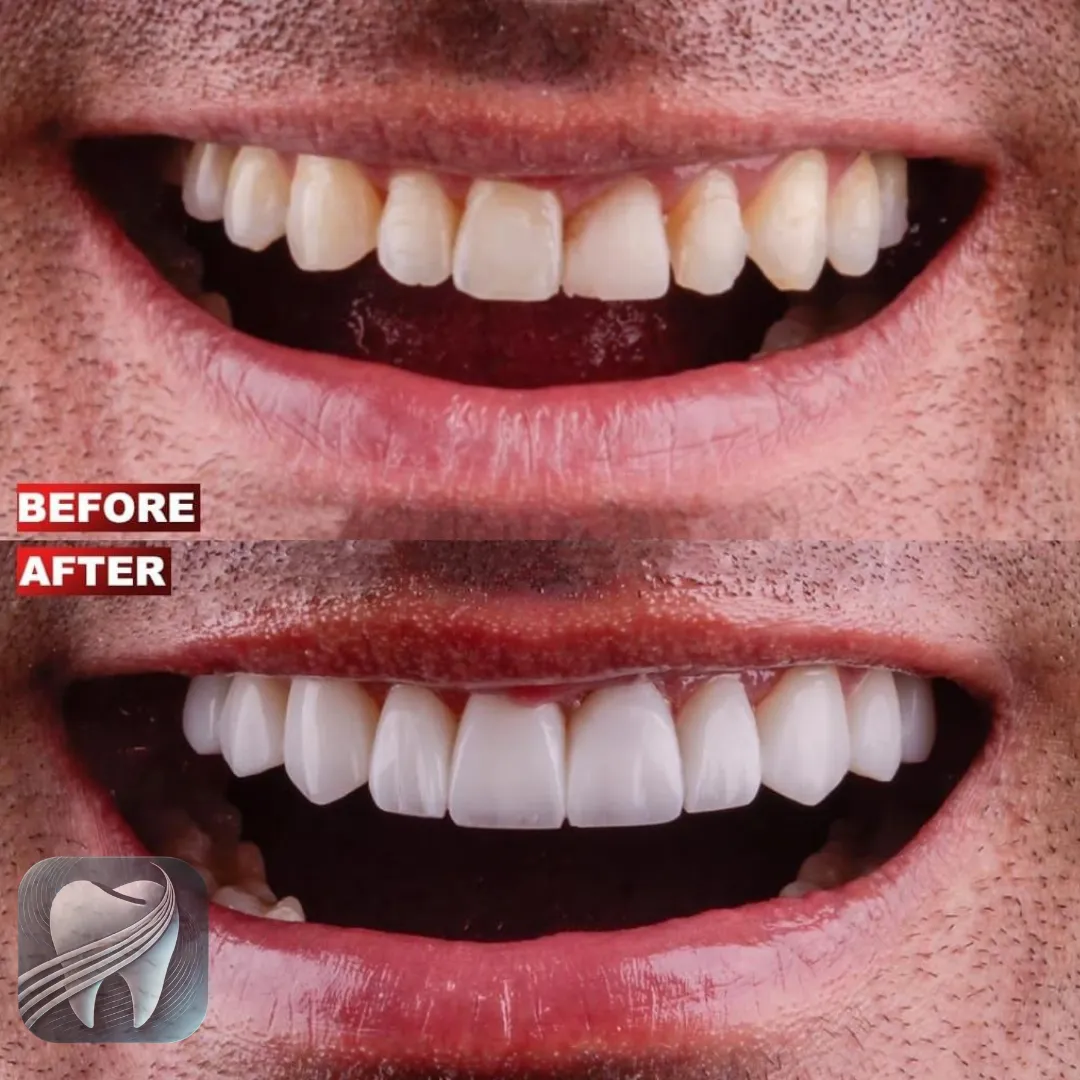
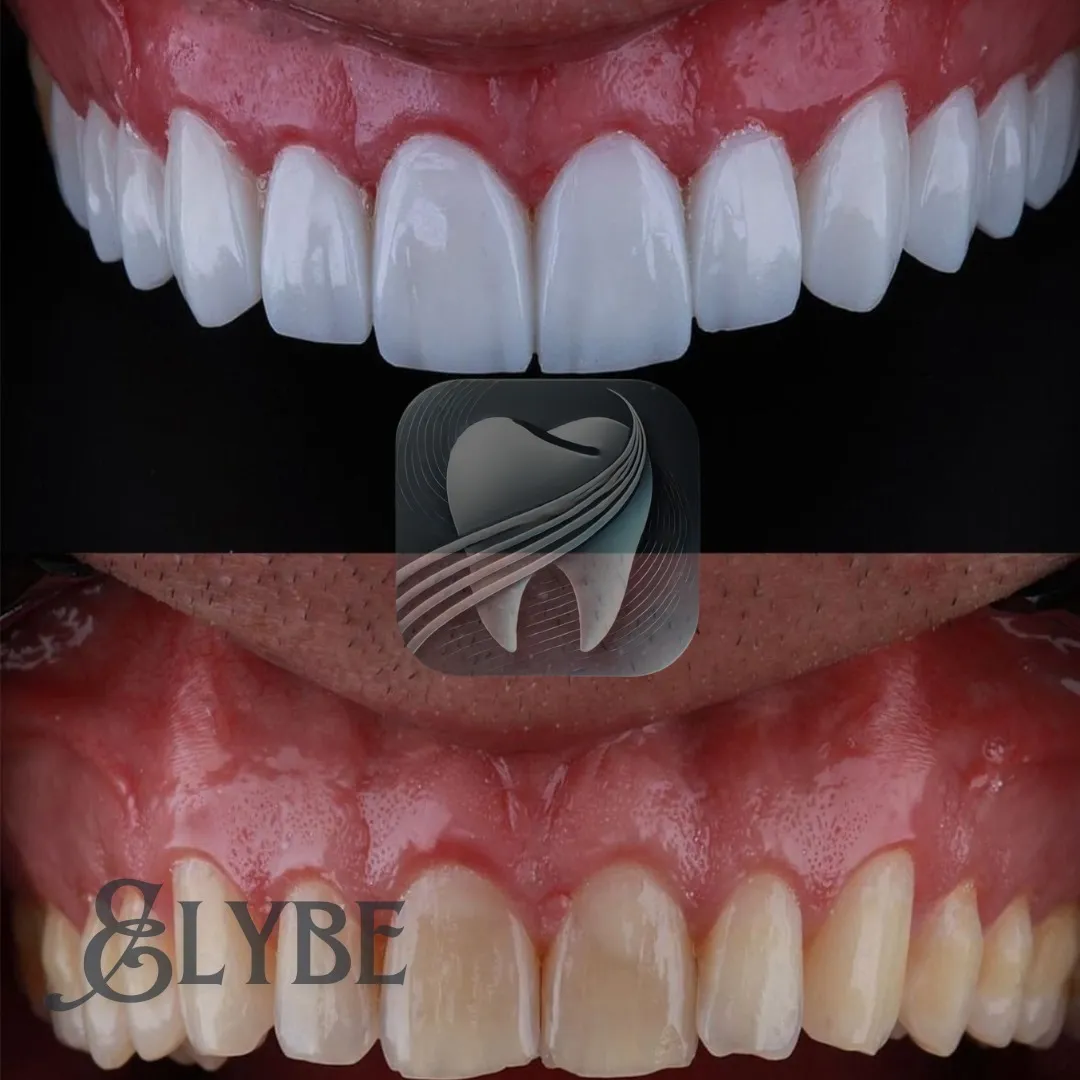
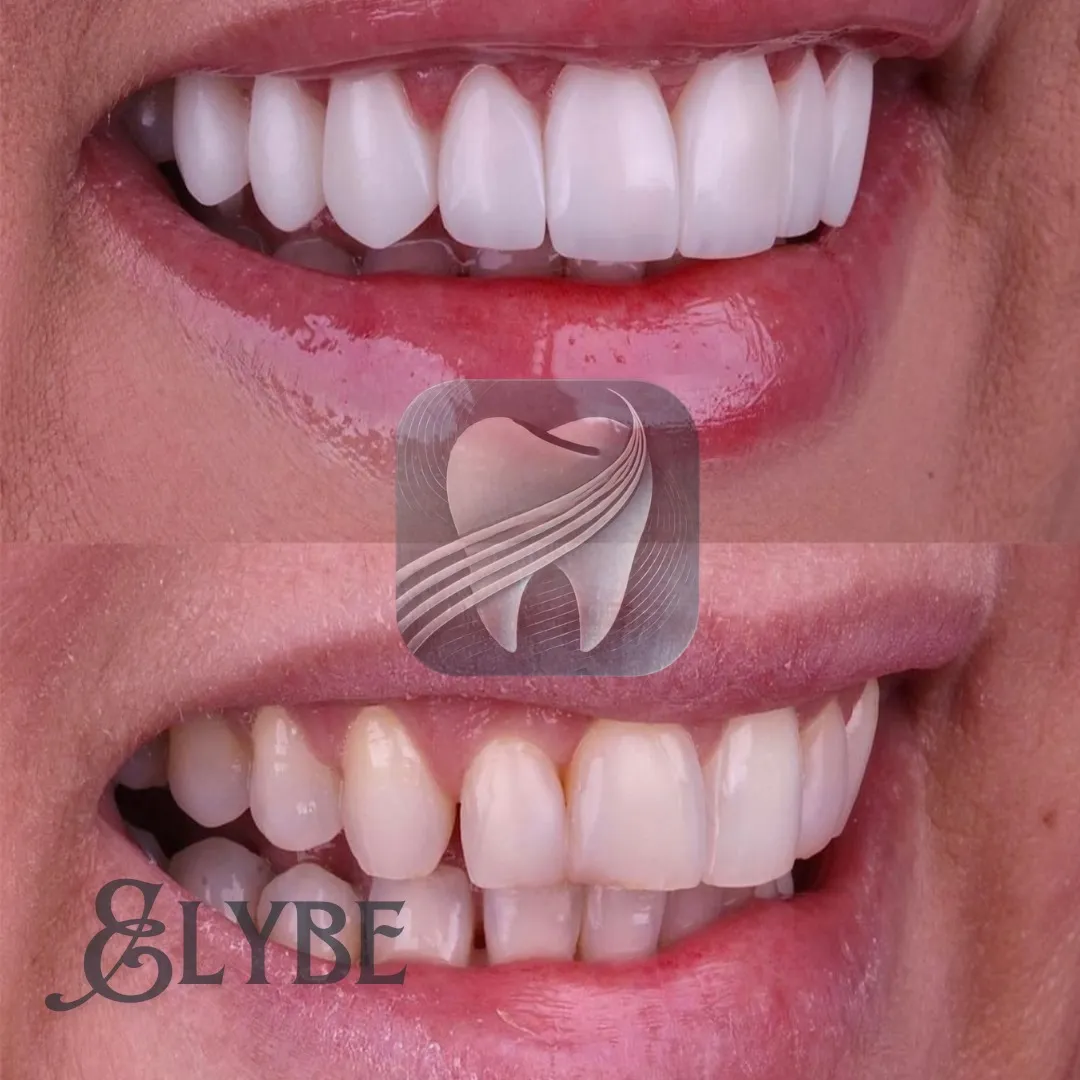
Elybe patients: smile close-ups before and after
Real photos of Elybe patients.
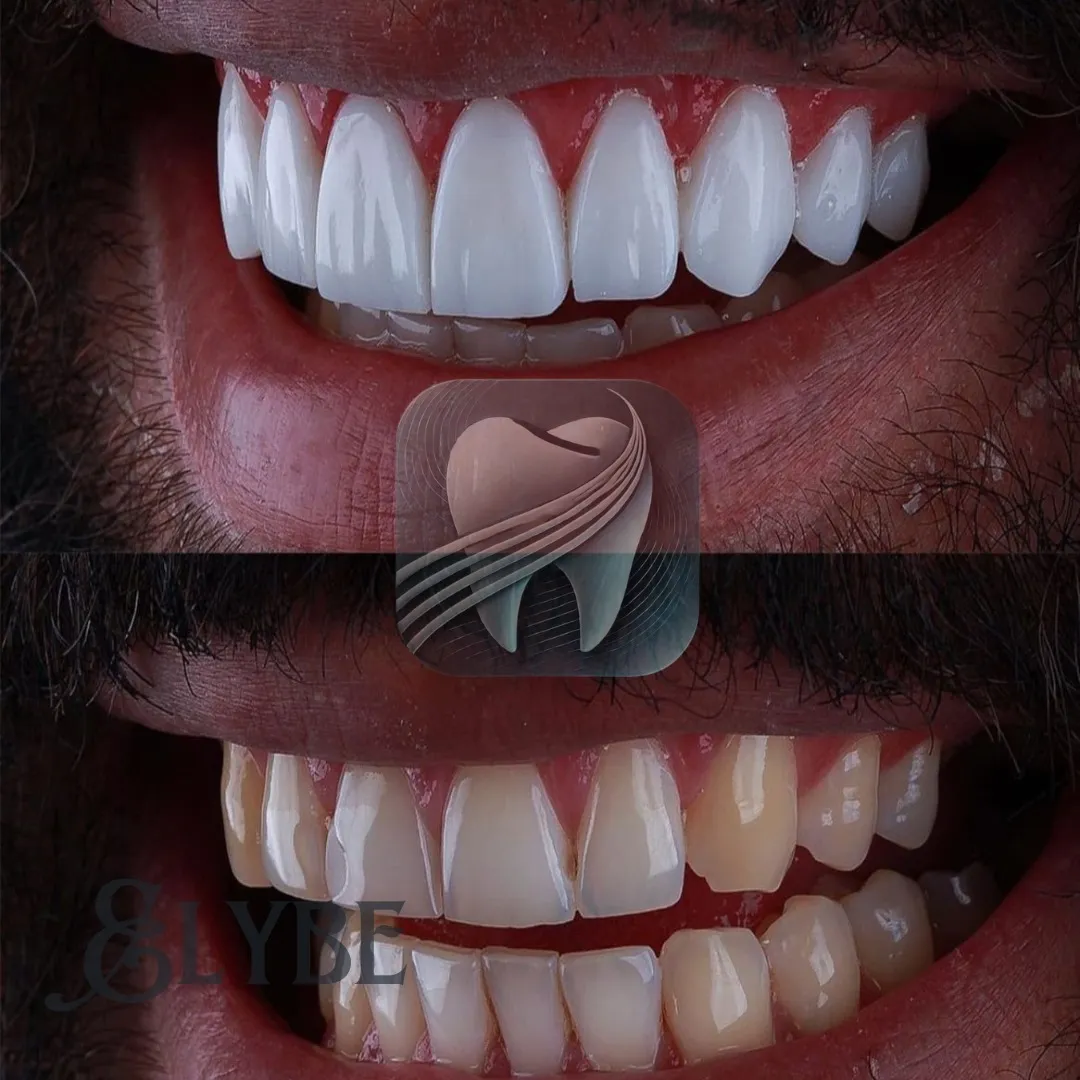
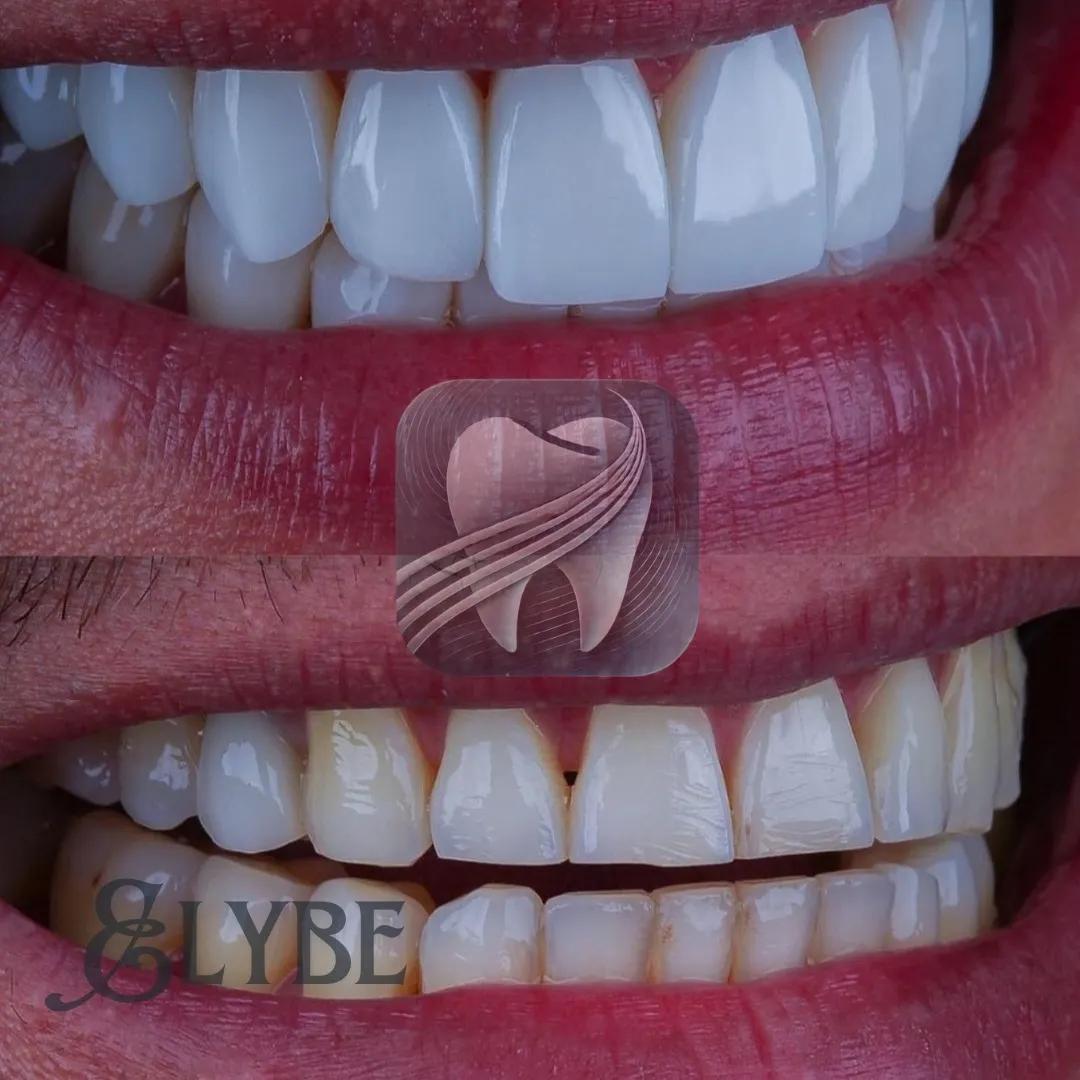
How much do veneers cost? Turkey vs the US and the UK
Price per tooth.
US and UK figures are typical ranges published by local clinics; your quote may differ. Elybe packages include smile design, hotel, airport transfers and interpreter; flights are extra. Get a price for your teeth: free dental quote.
What to look for in a veneer dentist
A preview before drilling
Digital design and an in-mouth mock-up: nothing is prepared until you approve.
Genuine materials
Original Ivoclar Emax blocks from Switzerland, with a traceability certificate.
Fixed package price
Veneers, hotel, transfers and interpreter in one price agreed before you fly.
5-year written guarantee
Replacement if a veneer breaks or comes off without impact.
Getting veneers in Istanbul: one week
Arrive
Airport pickup, hotel, exam and smile design.
Prepare
Mock-up try-on, tooth preparation and scans.
Explore
The lab makes your veneers while you see the city.
Smile
Try-in, bonding, final check and guarantee certificate.
Veneers: common questions
Veneers are thin shells of porcelain or composite resin bonded to the front of your teeth. They change the color, shape or length of teeth that are stained, chipped, worn or slightly gapped. They are mostly used on the teeth that show when you smile.
At Elybe Clinic in Istanbul, veneers cost €180 (composite), €230 (Emax porcelain), €280 (zirconia) or €350 (Lumineers) per tooth. In the US, porcelain veneers usually cost $925 to $2,500 per tooth, and in the UK about £400 to £1,000.
No, but they change them permanently. Most veneers need 0.3 to 0.7 mm of enamel removed, which does not grow back, so the tooth will always need a covering. Done well, the tooth underneath stays healthy.
Porcelain (Emax) veneers usually last 10 to 15 years and zirconia 15 to 20 years. Composite veneers last about 5 to 7 years. Good hygiene, check-ups and a night guard if you grind your teeth help them last longer.
No. Tooth preparation is done under local anesthetic, and bonding usually needs none. Mild sensitivity to hot and cold for a few days is common afterwards.
Porcelain looks more natural, resists stains and lasts much longer, but costs more. Composite is cheaper and easy to repair, but it stains and wears faster. For front teeth you want to keep for years, porcelain is usually the better choice.
Yes. A single veneer is often used for one chipped or darker front tooth. The challenge is matching the neighboring teeth exactly, which is why we test the shade in your mouth before bonding.
Only slightly. Veneers can hide small gaps and mild unevenness, but they do not move teeth. For clearly crooked teeth, orthodontic treatment such as aligners is usually needed first.
For information only, not a substitute for advice from a licensed dentist. Veneers are usually permanent: an exam is required first.
Veneer types and related treatments
Receive your veneer quote within 24 h
A front-facing photo of your smile is enough to start the digital smile design.