Lumineers vs veneers: which one is right for your teeth?
Lumineers are ultra-thin porcelain veneers that can usually go on without drilling. Classic porcelain veneers are thicker and hide more. This page compares them honestly, so you know which one fits your smile, and what each costs in Istanbul.
What is the difference between Lumineers and veneers?
Lumineers are a brand of ultra-thin porcelain veneers (0.2 to 0.3 mm) made by DenMat that can usually be bonded without drilling, while traditional porcelain veneers are thicker (0.3 to 0.7 mm) and need some enamel removed. Veneers hide stains and uneven teeth better; Lumineers preserve more natural tooth. At Elybe Clinic, Lumineers cost €350 per tooth, versus about $800 to $2,000 in the US.
Lumineers vs porcelain veneers compared
Are Lumineers better than veneers?
It depends on your teeth, not on the brand.
Choose Lumineers if
- Your teeth are healthy and fairly straight.
- You mainly want a brighter shade or smoother shape.
- You have a small gap of 1 to 2 mm to close.
- You do not want any tooth drilled.
Choose porcelain veneers if
- Your teeth have dark or deep stains.
- Teeth are worn, chipped or noticeably uneven.
- Some teeth stick out (Lumineers would add bulk).
- You grind your teeth: consider zirconia veneers.
Pros and cons of Lumineers
Pros: no drilling in most cases, little or no anesthetic, more natural tooth kept, often removable later. Cons: higher price per tooth, weaker at hiding dark stains, can look bulky on teeth that already protrude, and a slightly shorter lifespan than thicker porcelain. Other no-prep brands such as DURAthin work on the same principle; Lumineers is DenMat's trademarked version.
How Lumineers are fitted
Impressions at home
A local dentist scans your teeth, or we send you an impression kit, plus photos.
Lab work
Your Lumineers are custom-made in 1 to 2 weeks.
Try-in
In Istanbul, you see them in your mouth and approve shade and shape.
Bonding
The enamel is conditioned with a gel, then each shell is bonded and light-cured.
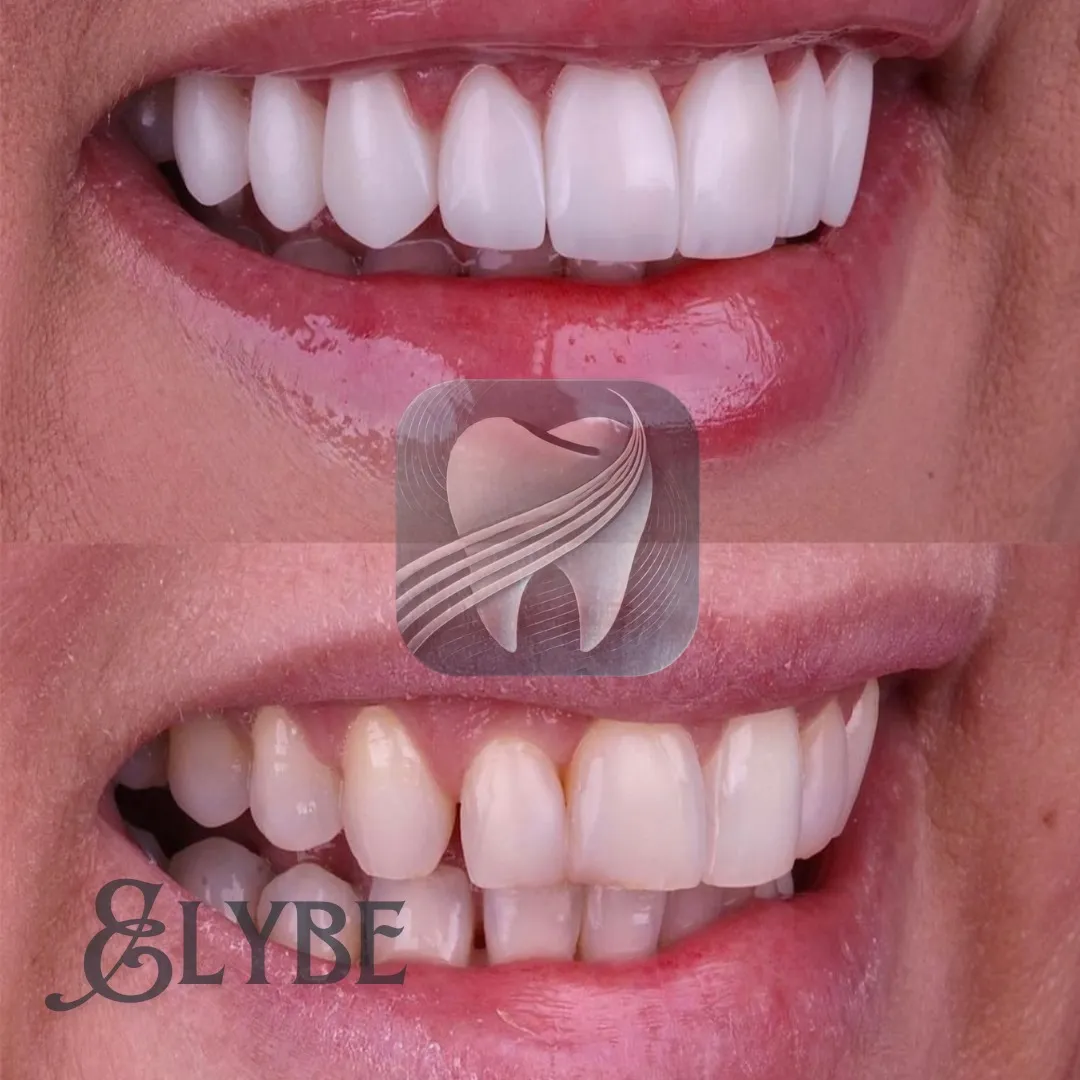
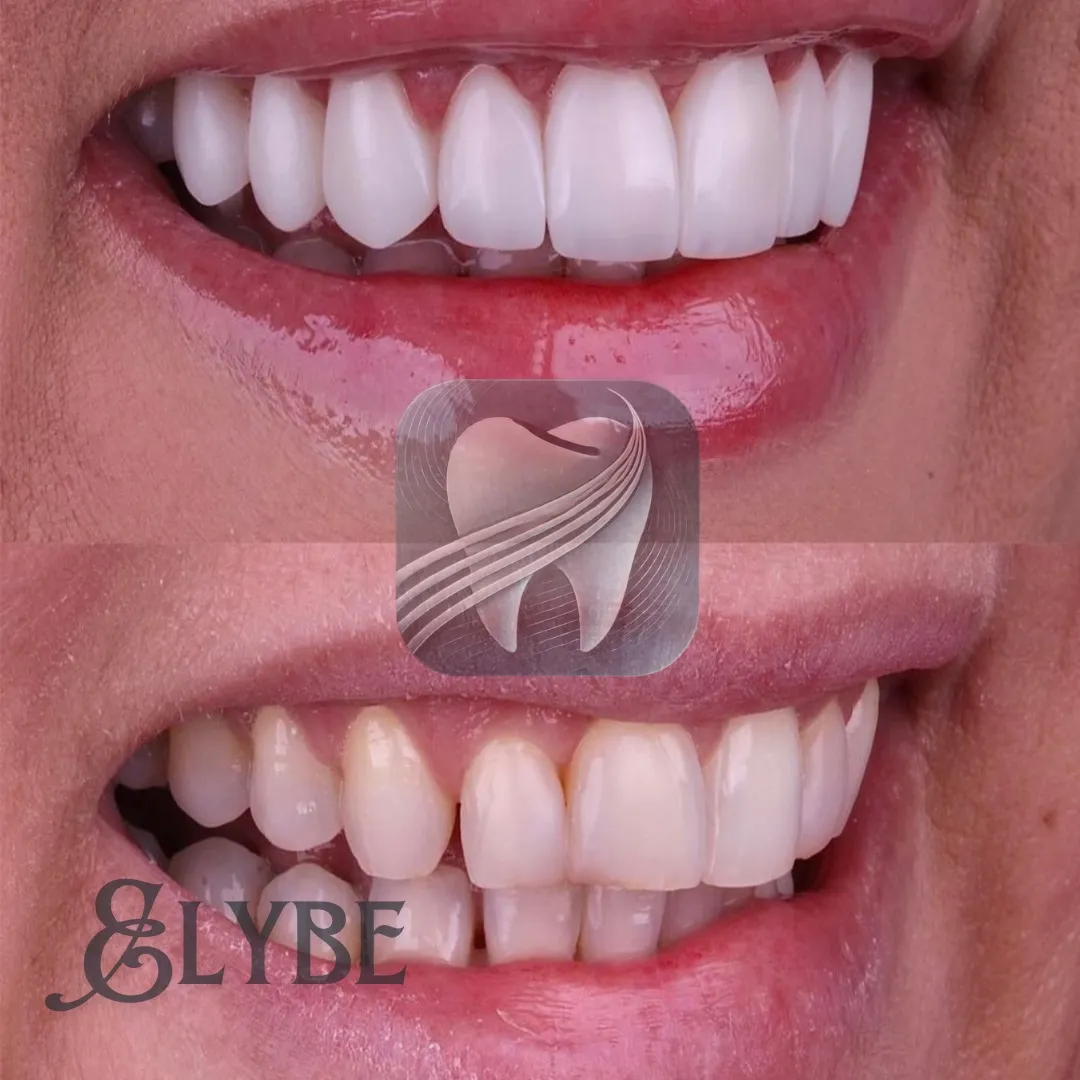
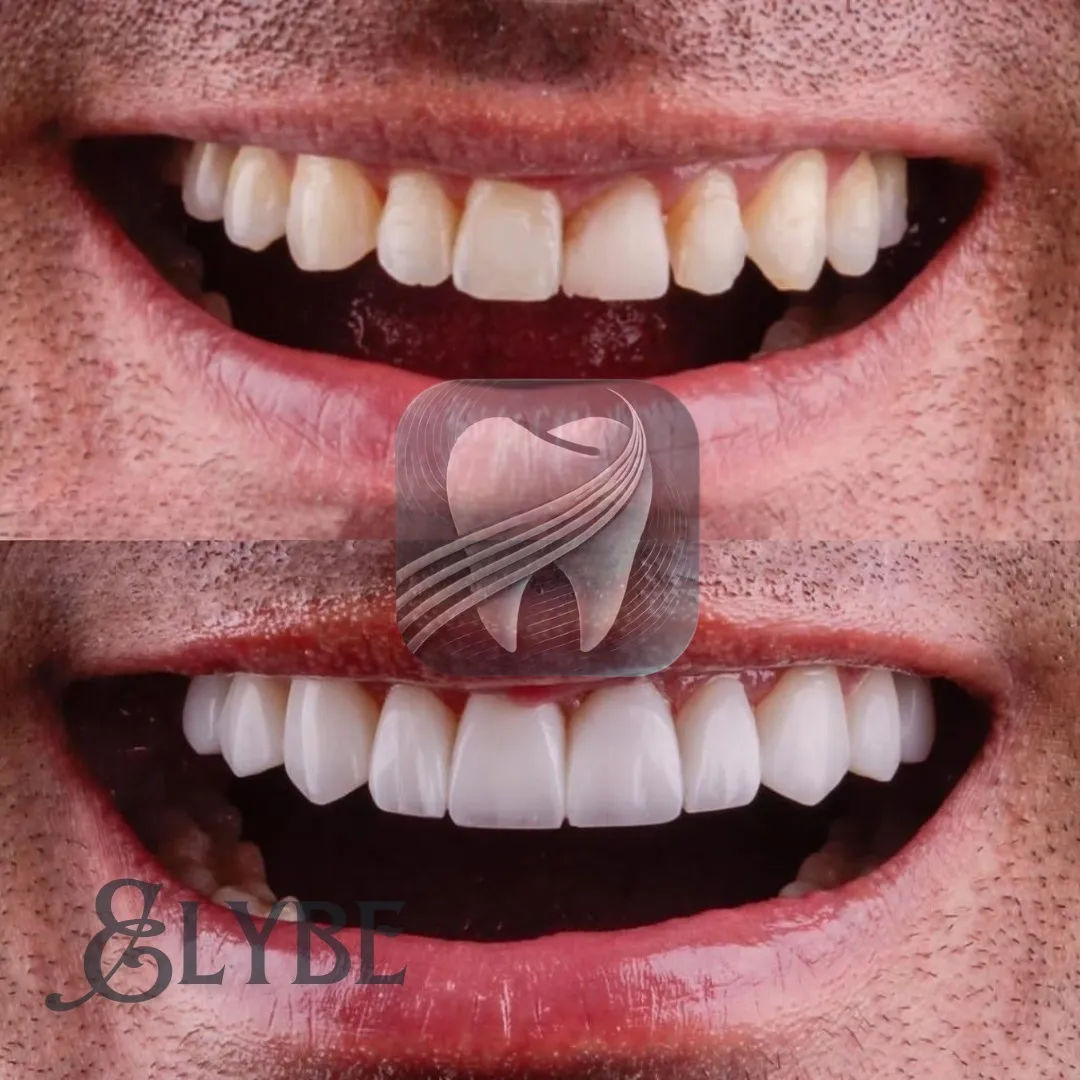
Smiles of Elybe patients
Real photos of Elybe patients, before and after cosmetic treatment.



Lumineers vs veneers price: Turkey, US and UK
US and UK figures are typical ranges published by local clinics; your quote may differ. Elybe packages include fitting, hotel, airport transfers and interpreter; flights are extra. For a full-smile plan, see the Hollywood Smile, or get a free dental quote.
Genuine Lumineers, and an honest second option
Made by DenMat
Your Lumineers come from the brand's own lab in California, with a certificate of authenticity.
Both options priced
Every quote compares Lumineers and porcelain veneers so you can choose freely.
Fixed package
Fabrication, fitting, hotel, transfers and interpreter in one price agreed upfront.
5-year guarantee
Covers breakage and de-bonding without impact.
Impressions at home, Lumineers fitted in 5 days
Impressions
Scanned by a local dentist or taken with a kit we mail to you.
Arrive and try in
Airport pickup, photos and try-in of your finished Lumineers.
Bonding
Surface conditioning, bonding, finishing and polishing.
Final check
Bite check, final photos, certificate, flight home.
Lumineers and veneers: your questions
Lumineers are a brand of ultra-thin porcelain veneers (0.2 to 0.3 mm) that can usually be bonded without drilling. Traditional porcelain veneers are thicker (0.3 to 0.7 mm) and need a thin layer of enamel removed first. Veneers hide more and last a little longer; Lumineers keep more of your natural tooth.
Neither is better for everyone. Lumineers suit healthy, straight teeth that need a brighter color or small shape changes, without drilling. Porcelain veneers are better for dark stains, worn or uneven teeth and bigger changes.
At Elybe Clinic in Istanbul, Lumineers cost €350 per tooth: €2,100 for 6, €3,500 for 10 and €6,500 for 20. In the US, Lumineers usually cost $800 to $2,000 per tooth, and in the UK about £500 to £1,200.
Lumineers usually last 7 to 15 years. Thicker porcelain veneers such as Emax last about 10 to 15 years, and zirconia veneers 15 to 20 years. Hygiene, check-ups and avoiding hard objects matter more than the brand.
Often, yes. Because little or no enamel is removed, Lumineers can usually be taken off with the tooth still in good shape. They are not fully reversible, though: the enamel is conditioned for bonding and a dentist must polish away the remaining cement.
On well-chosen cases, yes. Because they add a thin layer on top of the tooth, they can look slightly bulky on teeth that already stick out. That is why a try-in before bonding matters.
Adults with healthy enamel, fairly straight teeth and mild discoloration or small gaps. They are less suited to heavy stains, crowded teeth or people who grind their teeth at night.
No. Without drilling, most patients need no anesthetic at all. The enamel is conditioned with a gel, then each Lumineer is bonded and hardened with a curing light.
For information only, not a substitute for advice from a licensed dentist. Suitability for Lumineers is confirmed at an exam.
Other veneers and related treatments
Receive your Lumineers quote in 24 h
A front-facing smile photo is enough to assess the no-prep Lumineers indication.